
100 Issues Later
And 2025 Wrapped.

There are only a handful of things I have done consistently about 100 times. And as of today, writing this newsletter has entered the list.
I started reading and writing because all the smart people I wanted to mimic did it. And, if I am being honest, I thought maybe I could earn from it, too. My definition of success was superficial.
I stuck to the basics: a bulleted list of ideas I loved during the month. I thought I should share as many ideas as possible… because that’s what matters, right? Ideas.

But quickly, I started enjoying the process itself. Seeing strangers subscribe, people who weren’t just my friends being nice, gave me a form of validation I didn’t expect.
However, the data told a different story. The bulleted list ideas were too much to follow. They were complex. Readers weren’t seeing them the way I did.
So, I made my first pivot. I stopped just “sharing” and started “simplifying”. Information is common, but simplifying curated ideas is rare. I thought that was the secret sauce. I added custom illustrations to the mix. I told myself: “Success is near. The monetisation will kick in soon. You are the next Shane Parrish!”

It didn’t work.
A year later, I had another insight from the readers. People don’t actually care about simple ideas. They care about the application. What do I think about this? How am I using it? What’s in it for the reader?
That led to the second (and current) pivot. A fresh approach: one idea, simplified through storytelling and personal perspective.

You can see the transition in my writing style between the below two issues, almost 5 years apart:
#1: July 2020

#2: April 2025

So, am I finally successful? Nope. Is there even something called “successful”? I don’t think so. I have realised success is just a moving target you invent to keep yourself consistent. The carrot on the stick.
But in chasing that target, I found something better. I learned how to tell a story, how to illustrate, marketing, social media, and how to wrestle with the algorithm.
Most importantly, I connected with like-minded individuals who care about the same things I do. Whether you have been here for Issue #1 or Issue #100: Thank you! ❤️
Notes from the Arena
Since this is the 100th issue, I thought I had earned the right to share my lessons learned. In Hindi, we call it gyaan pelna.
🚘 Volume is the Vehicle
Quantity doesn’t compete with quality. Quantity is how you get to quality.
You need to get in the reps. You don’t find your style by thinking. You find it by making.
Creativity isn’t a lightning bolt; it’s a 9-to-5 job.
Kendrick Lamar’s Grammy-winning song, Not Like Us, was produced in an hour. But this could be done, because he spent a decade writing lyrics nobody heard. That hour took ten years to unlock.
When you keep creating consistently for years, you become an overnight success.
Slowly, and then all at once. Even if there is no audience to receive it, you build the muscle of making something and putting it out into the world.
📦 The Conveyor Belt Theory
We fail because we generate a few ideas and then obsess about refining them to perfection.
Imagine the outside world is a conveyor belt with a stream of small packages on it. These are ideas. Your job is simply to notice the belt is there. Pick up a package, unwrap it, check what you can see inside, and share it. The more you share, the more the belt speeds up. But if you pick one idea and polish it for a year, the belt stops.
My top three articles this year? I almost didn’t publish them. I thought they weren’t good enough. My most popular note was a random image I posted while commuting.
You are the worst judge of your own work.
If you are 80% there, hit publish. Because 80% out in the world beats 100% stuck in your head every single time.
🤖 The “Who” in the Age of AI
We live in the age of AI. Five years ago, value came from curation because the internet was a haystack. You were valuable if you could find the needle. Today, AI hands you the needle instantly.
Knowledge is no longer the moat. Perspective is.
I saw this while reading a post from Shambhavi which is 100% true:
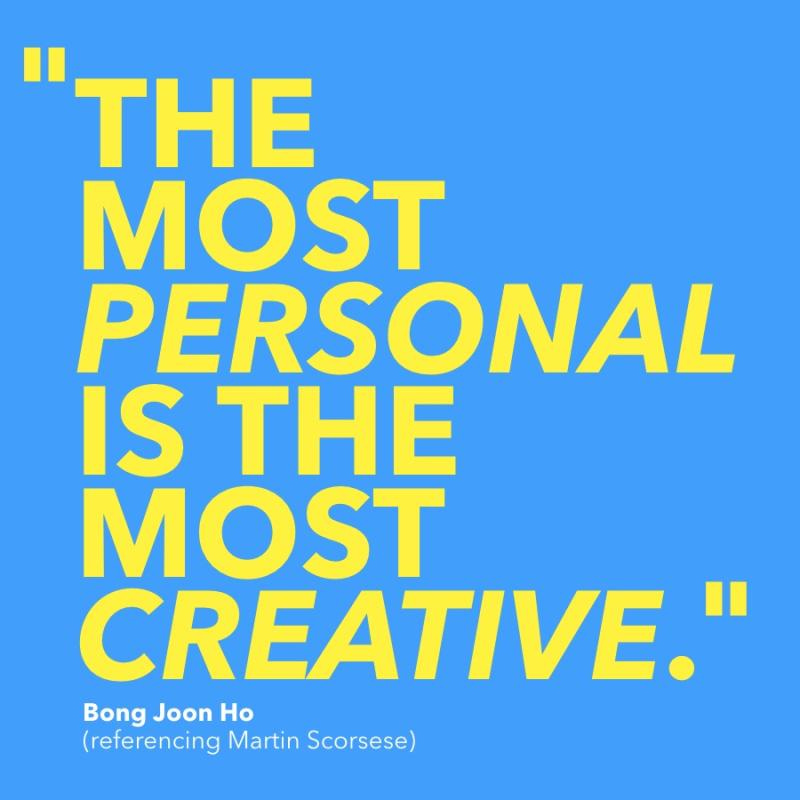
AI can synthesize the “what,” but it can never fake the “who.” It can give you the data, but it can’t give you taste.
But here is the hard truth: Perspective alone isn’t enough.
You can have the Library of Alexandria in your head, but if you stay in your room, it means nothing. Imagine a master teacher who understands a subject perfectly but never speaks to a soul. Now, imagine a decent teacher who shares their learning online every week. Who gets the opportunities? Who gets the deal flow?
Distribution increases your luck surface area.
AI can help you find ideas, refine them, and even edit them. But it cannot press “publish.” It cannot build the relationship. That is up to you. If you don’t distribute your ideas, someone else will distribute theirs.
Have you ever watched a viral Reel or read a LinkedIn post and thought, “That’s absolute BS, there’s nuance to the idea!” That isn’t annoyance. That is a signal. It’s a sign that the market is waiting for your perspective.
So, if you are on the fence about starting: don’t wait.
Write the essay. Film the video. Hit publish. You never know. Five years from now, you might just find yourself hitting “publish” on issue #100 to a random group of strangers on the internet. And trust me, it’s worth it.
That’s enough gyaan for today. Moving on to the…
2025 Wrapped: My Year in Reading
Every year, in the last issue of the newsletter, I take a detour to share my favourite books. It’s a tradition. Feel free to revisit 2021, 2022, 2023, and 2024 Wrapped!
All previous recommendations can be found on my bookshelf below:
No Filter: The Inside Story of Instagram by Sarah Frier: Facebook promised Instagram independence, then slowly strangled it. This book proves corporate acquisitions are often like microwaves: they generate heat fast, but usually ruin the taste. Recommended for anyone using the Meta ecosystem.
The Thinking Machine by Stephen Witt: Nvidia isn’t just for gamers; it’s the nervous system of the AI revolution. While standard chips solve problems sequentially, Jensen Huang’s chips solve thousands simultaneously, making them the only hardware capable of powering the future. You also get a lot of insight into Jensen Huang’s brain.
Careless People by Sarah Wynn-Williams: An idealist joins Facebook to do good, only to watch it monetise hate. The author can be melodramatic, she wasn’t a hostage, after all. But her account of a company choosing viral growth over user safety is terrifyingly real.
The Accidental Billionaires by Ben Mezrich: The dorm-room drama that birthed Facebook. This was the source material for the move, The Social Network. It’s fast, scandalous, and heavily fictionalised. Treat this like a blockbuster movie rather than a history textbook: great popcorn, questionable facts.
Think Again by Adam Grant: Grant wants you to stop thinking like a Preacher defending the faith, and start thinking like a Scientist testing a hypothesis. Intelligence isn’t about what you know; it’s about the flexibility to unlearn it when the data changes.
Stoner by John Williams: A farm boy becomes a professor and discovers that love isn’t a fairy tale, but a discipline you relearn daily. A quiet, devastating masterpiece about office politics, bad marriages, and the heroic endurance of an ordinary life.
Ghachar Ghochar by Vivek Shanbhag: A tight, tense novel about a family transitioning from poverty to wealth. As the bank balance grows, the relationships rot. The title translates to ‘tangled’, exactly what happens when money displaces love.
Creativity: A Short and Cheerful Guide by John Cleese: Cleese argues creativity isn’t a birthright, but a ‘mood’ you cultivate. A short, funny guide on switching off the busy work-mode to let the subconscious come out to play.
Atal Bihari Vajpayee: A Man for All Seasons by Kingshuk Nag: A portrait of a leader who was a poet by nature and a politician by circumstance. It reveals how patience and consensus-building, often mistaken for weakness, can outlast the brute force of ‘strongman’ politics.
🤓 The following newsletters were the “most read” this year:
Finally, I like to look at the data periodically to keep myself entertained. Currently, I feel the conveyor belt has slowed down. I am in a bit of a rut. To fix that, I need to pivot again. And I am not sure where to yet. So, I will be taking a brief sabbatical. When will I be back? Not sure. Maybe January, maybe later. But I will be back.
Happy holidays,
Tapan
Thank you for reading! 🙏🏽 Help me reach my goal of 2,300 readers in 2026 by sharing this post with friends, family, and colleagues! ♥️
As an Amazon Associate, tapandesai.susbtack.com earns commission from qualifying purchases.
Love the way you use illustrations and simple examples to simplify complex concepts. Will check those book recommendations (low key hoping some day my book makes it to the list)
My favourite line of the lot - 'personal is most creative'
100!! What a number. Congratulations on the achievement and looking forward to 1000 🚀🚀